

FREE In-store Pick Up. Delivery Rates vary (determined at checkout).

Saturday Webinars | Watering & Maintenance

Saturday Webinars | Watering & Maintenance

Hey gardener!

How’s the garden coming along? While there is more time to spend enjoying all the beauty we’re created, the work is never truly over. We’re always going to be watering and maintaining it throughout the season. Today, Colin explored the scientific relationship between plants and water including how and why we do it. Colin also touched on easy maintenance practices you can do during the summer months to keep everything looking fresh and vibrant.

WATERING

Why Water?

Water is vital for a plants development. It aids in processes like photosynthesis, the absorption of nutrients, and the reinforcement of cell structures within.

  • Photosynthesis: How plants make food. Plants turn carbon dioxide, light, and water into sugar and oxygen. Water assists the phloem and xylem systems in moving sugars and nutrients through the plant. There is a more in-depth diagram on the PowerPoint below

How Much Water?

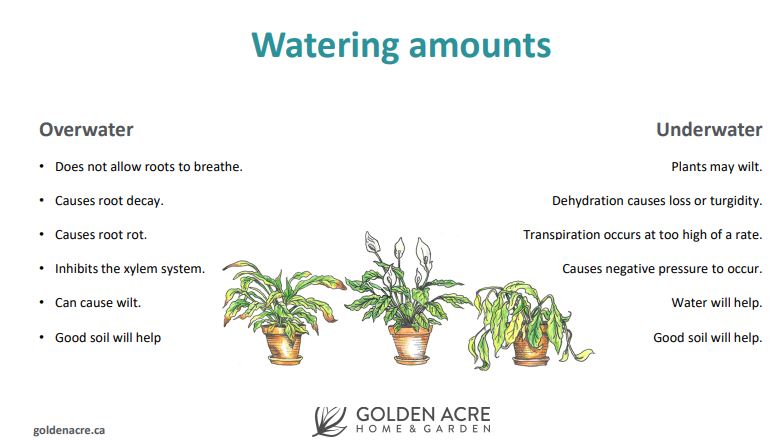
Here is a slide from Colin’s PowerPoint talking about overwatering and underwatering. This can be such a balancing act, but good to know as you observe your garden throughout the season.
What Water Should You Use?

There are a lot of opinions surrounding the use of rainwater vs tap water.

Rain water is free and contains no hard minerals. Even the rain during a thunderstorm can contain nitrates and a positive charge that will give plants a boost in health. However, rain can be unreliable, especially in the hot summers when we may need to water multiple times a day. So, collecting rain can be a positive addition to your garden to offset some of the costs associated with using city water. We are partnered with the City of Calgary and Green Calgary as a distributer of rain barrels. Learn more on our website where you can reserve your own barrel for pick up or delivery. 

Tap water is costly, but far more convenient and dependable than rainwater. It does tend to contain more minerals, but it won’t harm plants.

Which Parts of the Plant Need Water?

A plant absorbs water and nutrients through its roots, so it’s important to saturate the soil when watering, especially during the hot summer days. However, there are benefits to watering the leaves such as pest and fungal control as well as a way to wash off dust particles that may block photosynthesis efforts.

Which Watering Tool Should I Use?

There are so many ways to water, and each tool carries pros and cons.

  • Nozzle / Wand | This lightweight tool gives you lots of control with many available settings and efficiency of an ongoing stream of water that you bring around to all your plants around the yard. Click here for nozzle / wand options. 
  • Sprinkler | This tool can be wasteful as it can target areas like concrete that don’t require water. That being said, it’s lightweight and can cover a lot of ground. They’re also pretty fun for the birds and kids in our lives. Click here for sprinkler options. 
  • Soaker Hose | These cost effective hoses are great for targeting roots in a semi-permanent fashion. Once installed, they provide an easily controlled way to water for the rest of the season. However, they’re not great for lawns, hanging baskets, etc. Make sure to remove and store them inside for the winter. Click here for soaker hoses
  • Irrigation System | This is a more expensive method, but can be useful if you’re not around to water. They can be wasteful as timed irrigation system will run regardless of rain or not.
  • Watering Can | This is the best method for soluble fertilizing and an affordable option. However, can be time consuming especially with a larger garden. Click here for watering cans
  • Rain | This method is effective and free! However, rain is unreliable and may cause damage should bad weather roll in.

MAINTENANCE

Continue to weed, fertilize, deadhead finished blooms, and prune. Keep an eye out for trouble like pests and diseases and treat accordingly before they become a major problem. As Colin says, gardening is marathon not a sprint. Enjoy the process and complete these little jobs frequently to ensure a healthy garden throughout the growing season.


The more detailed encore presentation hosted by Colin Hayles is now available to view on our YouTube channel.

If you’d like a copy of Colin’s PowerPoint, click here: Golden Acre Webinars – Watering & Maintenance 2022


UPCOMING FREE WEBINARS/SEMINARS:

This wraps up our Saturday webinars for 2022! We are always available to help you through your gardening adventures. Feel free to reach out to us online, over the phone, or in store. Thank you so much for your support this year, and happy growing!


Translate »

Calcium Nitrate:

Mix Ratio: Apply ¼ teaspoon per 2 litres once a week. I full scoop makes 24 litres or 6 gallons.

Recommended preventing blossom end rot and calcium deficiency in tomatoes, peppers, cucumbers, pumpkins, zucchinis, and cannabis. It is also highly beneficial for all leafy greens and cruciferous plants (cabbage, Brussel sprouts, broccoli etc.).

Caution: Do not exceed the recommended amount. Keep out of reach of children and pets.

Iron Chelate

Mix Ratio: Soil drench – apply ¼ teaspoon (1gram) /per 1 Litre of water once every 2 weeks. A full scoop makes 12 litres or 3 gallons.

Mix ratio: Foliar spray - apply ¼ teaspoon (1gram) /per 4 Litres of water once every 4 weeks. A full scoop makes 24 litres or 6 gallons.

Recommended for correcting iron deficiency in a variety of plants grown in high pH soil. Iron deficiency is diagnosed by the yellowing or pale colour of the plant leaves, especially in young growth.

Caution: Do not exceed the recommended amount. Keep out of reach of children and pets.

High Drainage

Moisten Thoroughly before use: (optional) Peat moss can be water-repellent. Before use, thoroughly wet the soil.

Potting:

Use pots with drainage holes to prevent root rot.

Fill the pot with the moistened soil, leaving enough space for the plant's root ball.

Gently place the plant in the pot and fill in around it with more soil.

Firm the soil gently.

Watering:

This is crucial! Water frequently, especially during hot weather.

Check the soil moisture regularly by sticking your finger into the soil.

Water deeply when the top inch of soil feels dry.

Fertilizing:

Since peat moss is low in nutrients, fertilize regularly with a balanced liquid fertilizer.

Consider Amendments:

For plants that prefer more moisture retention, you can add a small amount of coco coir or vermiculite to the mix.

Important Notes:

Overwatering: While frequent watering is necessary, avoid overwatering, which can lead to root rot.

Plant Selection: This type of soil is well-suited for seed starting as well as plants that prefer well-drained conditions, such as cacti, cannabis, succulents, and some tropical plants.

Adjustments: You may need to adjust your watering frequency based on the specific plant and environmental conditions (temperature, humidity, sunlight).

Alberta Blend

Moisten the Peat Moss before use: (optional) Peat moss can be hydrophobic (water-repellent) when dry. Before using it, thoroughly moisten it. You can do this by placing it in a container and adding water, then squeezing out any excess.

Mixing: (optional) Our Private Label Alberta Blend comes ready to use, expertly formulated for your plants, either indoors or outdoors.

If you're using this mix as your own base, combine it with worm castings, volcanic dust, vermiculite, etc. to improve nutrition, drainage and/or aeration.

Potting:

When potting your plants, ensure that the pot has drainage holes.

Fill the pot with the moistened potting mix, leaving enough space for the plant's root ball.

Gently place the plant in the pot and fill in around it with more potting mix.

Lightly firm the soil around the plant leaving ½ inch to an inch of space at the top for watering.

Watering:

Because peat moss retains water, be careful not to overwater.

Allow the top layer of soil to dry out slightly before watering again.

Fertilizing:

Since peat moss is nutrient-poor, you'll need to provide your plants with regular fertilization.

Use the correct fertilizer according to the plant's needs.

20-20-20 Houseplant Complete

Mix Ratio: For all houseplants apply ¼ teaspoon (1gram) /per 1 Litre of water once a week once every week. A full scoop makes 12 litres or 3 gallons.

It is highly recommended to start your houseplants on a fertilizer regime, but only while they are actively growing. Houseplants tend to have a period of dormancy (normally winter, however poinsettias, Xmas cacti etc. are exceptions to this rule) and whilst dormant they should not be fertilized.

Caution: Do not exceed the recommended amount. Keep out of reach of children and pets.

22-6-15 Plus Herb and Leafy Vegetable

Mix Ratio: For all herbaceous and leafy vegetable plants apply ¼ teaspoon (1gram) /per 1 Litre of water once a week. A full scoop makes 12 litres or 3 gallons.

This fertilizer is ideal for all leafy vegetables and for herbs. This product can be used year-round if you grow herbs indoors.

Caution: Do not exceed the recommended amount. Keep out of reach of children and pets.

20-12-28 Tomato and Fruiting Vegetable

Mix Ratio: For all fruiting vegetable plants apply ¼ teaspoon (1gram) /per 1 Litre of water once a week. A full scoop makes 12 litres or 3 gallons.

Use this fertilizer on planting day and push right through until the plant either stops producing or reaches the end of season. In the case of transplanted seedlings this fertilizer should be used after the 2 feedings of Js - Jump-Start & Transplant.

Caution: Do not exceed the recommended amount. Keep out of reach of children and pets.

10-52-10 Jump-Start & Transplant

Mix Ratio: For outdoor summer plants apply ¼ teaspoon (1gram) /per 1 Litre of water. Normally two applications, one at the time of transplanting, the second application can be done one week later from the initial fertilizing. A full scoop makes 12 litres or 3 gallons.

Mix Ratio: For seed starting - apply ¼ teaspoon (1gram) /per 1 Litre of water. Do not over water seedlings, feed every 2 weeks until transplanted outside. Feed them at the time of transplanting outdoors, then one more feeding a week later. After that start using the correct fertilizer for type of plant. A full scoop makes 12 litres or 3 gallons.

 e.g. Vt Vegetable: Tomato and Fruiting for tomatoes, F3 Flower flower flower for bedding out/annual plants.

Caution: Do not exceed the recommended amount. Keep out of reach of children and pets.

4-5-28 Perennial Complete

Mix Ratio: All perennials (in warm seasons) apply ¼ teaspoon (1gram) /per 1 Litre of water every 2 weeks from spring to late summer. A full scoop makes 12 litres or 3 gallons.

This formula is professionally blended for all your perennials. For existing perennials, we recommend starting to fertilize when you see active growth (i.e. new shoots etc.). For new perennials we recommend that you start fertilizing at time of planting and go through to mid August.

Caution: Do not exceed the recommended amount. Keep out of reach of children and pets.

28-14-14 Plus Trees and Shrubs - Fruit and Flower

Mix Ratio: Trees and/or shrubs (in warm seasons) apply ¼ teaspoon (1gram) /per 1 Litre of water per week. A full scoop makes 12 litres or 3 gallons.

This formula is professionally blended for all your fruiting and flowering trees and shrubs.

For existing trees, we recommend starting to fertilize when you see active growth (i.e. bud break, new shoots etc.).

For new trees we recommend that you start fertilizing at time of planting and go through to mid August.

Caution: Do not exceed the recommended amount. Keep out of reach of children and pets.

14-7-21 Tree and Shrub Leaf & Needle

Mix Ratio: Trees and/or shrubs (in warm seasons) apply ¼ teaspoon (1gram) /per 1 Litre of water every 2 weeks. A full scoop makes 12 litres or 3 gallons.

This formula is professionally blended for all your evergreen/coniferous and deciduous trees and shrubs.

For existing trees, we recommend starting to fertilize when you see active growth (i.e. bud break, new shoots etc.).

For new trees we recommend that you start fertilizing at time of planting and go through to mid August.

Caution: Do not exceed the recommended amount. Keep out of reach of children and pets.

15-10-30 Flower, Flower, Flower

Mix Ratio: Outdoor plants (in warm seasons) apply ¼ teaspoon (1gram) /per 1 Litre of water twice a week. A full scoop makes 12 litres or 3 gallons.

This formula is professionally blended for all your annual plants. We recommend starting to fertilize at time of planting outdoors and go through to first frost.

Caution: Do not exceed the recommended amount. Keep out of reach of children and pets.