
FREE In-store Pick Up. Delivery Rates vary (determined at checkout).

Lessons in a ‘Great Depression Garden’

Lessons in a ‘Great Depression Garden’

Ever feel like your grocery bill is personally attacking you? It turns out the secret to beating food inflation might actually be buried in 1929. This week, we’re exploring a living history project in Ontario. We’re talking about massive cabbages, root veggies that taste like candy, and why “hard to kill” is our new favorite plant description. What can we learn from planting a garden rooted in the Great Depression?


Everything Old is New (and Edible) Again

Retired minister, Anne Marie Allen, has cultivated a “Depression-era garden” at the Blackfriars Community Garden in Ontario. While it sounds a bit bleak, the logic is actually genius: if it helped people survive the 1930s, it can help us navigate 2026. Allen’s garden isn’t about aesthetic “cottagecore” vibes—it’s about function over flavor. Back then, they didn’t care if a tomato was “heirloom purple” or “perfectly round.” They cared if it could stay edible in a cellar for six months without a plug-in fridge. What a cool way to connect with community.

it’ll be very hard to locate these forgotten veggies in your local grocery store because they aren’t “profitable” for big machines to harvest, but for a backyard gardener? They’re gold.

  • Danish Ballhead Cabbage: A massive cabbage known for its durability, staying fresh for up to eight months.

  • Skirrets: Perennial root veggies that taste like starchy, sweet carrots. When sugar was a luxury, these were basically the “dessert” of the garden.

  • Good-King-Henry: The “tough-as-nails” cousin of spinach. It’s a perennial leafy green that you can actually harvest throughout the winter.

  • Earth Chestnuts: “Set it and forget it” root crop that is incredibly easy to preserve.
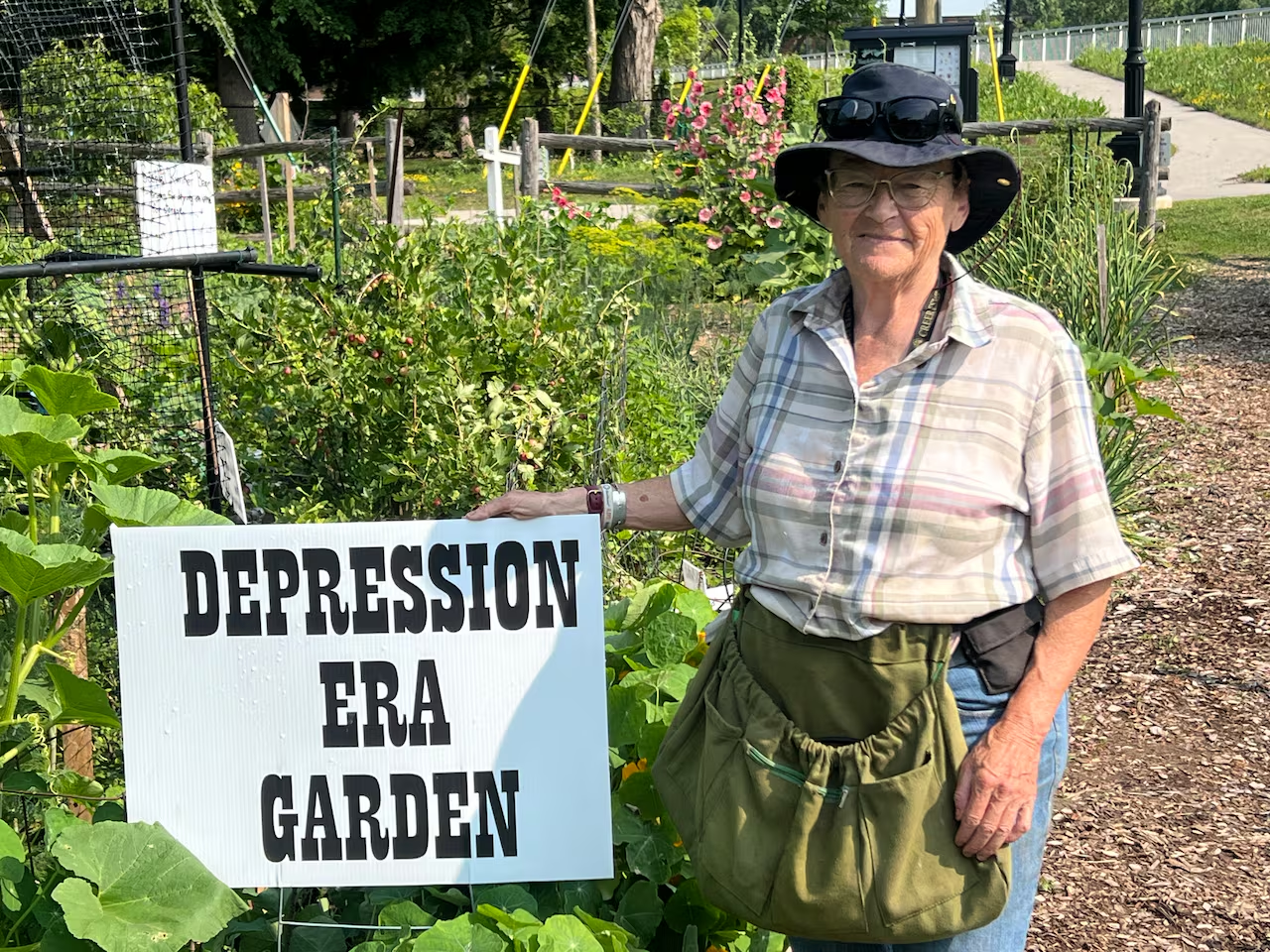
Food insecurity isn’t just a history book chapter anymore. With rising costs, learning to grow crops that are “hard to kill” is a life skill and can be a fun learning opportunity too! These plants are resilient, cold-hardy, and once they’re established, they basically take care of themselves.

Anne Marie sourced her rare seeds from the Small Island Seed Co. on Vancouver Island. They specialize in these rare, perennial crops that thrive in Canadian climates. It’s a niche world, but it’s growing fast as more of us look for ways to make our homes a little more self-sufficient.


Episode Links & Resources:

Translate »

Calcium Nitrate:

Mix Ratio: Apply ¼ teaspoon per 2 litres once a week. I full scoop makes 24 litres or 6 gallons.

Recommended preventing blossom end rot and calcium deficiency in tomatoes, peppers, cucumbers, pumpkins, zucchinis, and cannabis. It is also highly beneficial for all leafy greens and cruciferous plants (cabbage, Brussel sprouts, broccoli etc.).

Caution: Do not exceed the recommended amount. Keep out of reach of children and pets.

Iron Chelate

Mix Ratio: Soil drench – apply ¼ teaspoon (1gram) /per 1 Litre of water once every 2 weeks. A full scoop makes 12 litres or 3 gallons.

Mix ratio: Foliar spray - apply ¼ teaspoon (1gram) /per 4 Litres of water once every 4 weeks. A full scoop makes 24 litres or 6 gallons.

Recommended for correcting iron deficiency in a variety of plants grown in high pH soil. Iron deficiency is diagnosed by the yellowing or pale colour of the plant leaves, especially in young growth.

Caution: Do not exceed the recommended amount. Keep out of reach of children and pets.

High Drainage

Moisten Thoroughly before use: (optional) Peat moss can be water-repellent. Before use, thoroughly wet the soil.

Potting:

Use pots with drainage holes to prevent root rot.

Fill the pot with the moistened soil, leaving enough space for the plant's root ball.

Gently place the plant in the pot and fill in around it with more soil.

Firm the soil gently.

Watering:

This is crucial! Water frequently, especially during hot weather.

Check the soil moisture regularly by sticking your finger into the soil.

Water deeply when the top inch of soil feels dry.

Fertilizing:

Since peat moss is low in nutrients, fertilize regularly with a balanced liquid fertilizer.

Consider Amendments:

For plants that prefer more moisture retention, you can add a small amount of coco coir or vermiculite to the mix.

Important Notes:

Overwatering: While frequent watering is necessary, avoid overwatering, which can lead to root rot.

Plant Selection: This type of soil is well-suited for seed starting as well as plants that prefer well-drained conditions, such as cacti, cannabis, succulents, and some tropical plants.

Adjustments: You may need to adjust your watering frequency based on the specific plant and environmental conditions (temperature, humidity, sunlight).

Alberta Blend

Moisten the Peat Moss before use: (optional) Peat moss can be hydrophobic (water-repellent) when dry. Before using it, thoroughly moisten it. You can do this by placing it in a container and adding water, then squeezing out any excess.

Mixing: (optional) Our Private Label Alberta Blend comes ready to use, expertly formulated for your plants, either indoors or outdoors.

If you're using this mix as your own base, combine it with worm castings, volcanic dust, vermiculite, etc. to improve nutrition, drainage and/or aeration.

Potting:

When potting your plants, ensure that the pot has drainage holes.

Fill the pot with the moistened potting mix, leaving enough space for the plant's root ball.

Gently place the plant in the pot and fill in around it with more potting mix.

Lightly firm the soil around the plant leaving ½ inch to an inch of space at the top for watering.

Watering:

Because peat moss retains water, be careful not to overwater.

Allow the top layer of soil to dry out slightly before watering again.

Fertilizing:

Since peat moss is nutrient-poor, you'll need to provide your plants with regular fertilization.

Use the correct fertilizer according to the plant's needs.

20-20-20 Houseplant Complete

Mix Ratio: For all houseplants apply ¼ teaspoon (1gram) /per 1 Litre of water once a week once every week. A full scoop makes 12 litres or 3 gallons.

It is highly recommended to start your houseplants on a fertilizer regime, but only while they are actively growing. Houseplants tend to have a period of dormancy (normally winter, however poinsettias, Xmas cacti etc. are exceptions to this rule) and whilst dormant they should not be fertilized.

Caution: Do not exceed the recommended amount. Keep out of reach of children and pets.

22-6-15 Plus Herb and Leafy Vegetable

Mix Ratio: For all herbaceous and leafy vegetable plants apply ¼ teaspoon (1gram) /per 1 Litre of water once a week. A full scoop makes 12 litres or 3 gallons.

This fertilizer is ideal for all leafy vegetables and for herbs. This product can be used year-round if you grow herbs indoors.

Caution: Do not exceed the recommended amount. Keep out of reach of children and pets.

20-12-28 Tomato and Fruiting Vegetable

Mix Ratio: For all fruiting vegetable plants apply ¼ teaspoon (1gram) /per 1 Litre of water once a week. A full scoop makes 12 litres or 3 gallons.

Use this fertilizer on planting day and push right through until the plant either stops producing or reaches the end of season. In the case of transplanted seedlings this fertilizer should be used after the 2 feedings of Js - Jump-Start & Transplant.

Caution: Do not exceed the recommended amount. Keep out of reach of children and pets.

10-52-10 Jump-Start & Transplant

Mix Ratio: For outdoor summer plants apply ¼ teaspoon (1gram) /per 1 Litre of water. Normally two applications, one at the time of transplanting, the second application can be done one week later from the initial fertilizing. A full scoop makes 12 litres or 3 gallons.

Mix Ratio: For seed starting - apply ¼ teaspoon (1gram) /per 1 Litre of water. Do not over water seedlings, feed every 2 weeks until transplanted outside. Feed them at the time of transplanting outdoors, then one more feeding a week later. After that start using the correct fertilizer for type of plant. A full scoop makes 12 litres or 3 gallons.

 e.g. Vt Vegetable: Tomato and Fruiting for tomatoes, F3 Flower flower flower for bedding out/annual plants.

Caution: Do not exceed the recommended amount. Keep out of reach of children and pets.

4-5-28 Perennial Complete

Mix Ratio: All perennials (in warm seasons) apply ¼ teaspoon (1gram) /per 1 Litre of water every 2 weeks from spring to late summer. A full scoop makes 12 litres or 3 gallons.

This formula is professionally blended for all your perennials. For existing perennials, we recommend starting to fertilize when you see active growth (i.e. new shoots etc.). For new perennials we recommend that you start fertilizing at time of planting and go through to mid August.

Caution: Do not exceed the recommended amount. Keep out of reach of children and pets.

28-14-14 Plus Trees and Shrubs - Fruit and Flower

Mix Ratio: Trees and/or shrubs (in warm seasons) apply ¼ teaspoon (1gram) /per 1 Litre of water per week. A full scoop makes 12 litres or 3 gallons.

This formula is professionally blended for all your fruiting and flowering trees and shrubs.

For existing trees, we recommend starting to fertilize when you see active growth (i.e. bud break, new shoots etc.).

For new trees we recommend that you start fertilizing at time of planting and go through to mid August.

Caution: Do not exceed the recommended amount. Keep out of reach of children and pets.

14-7-21 Tree and Shrub Leaf & Needle

Mix Ratio: Trees and/or shrubs (in warm seasons) apply ¼ teaspoon (1gram) /per 1 Litre of water every 2 weeks. A full scoop makes 12 litres or 3 gallons.

This formula is professionally blended for all your evergreen/coniferous and deciduous trees and shrubs.

For existing trees, we recommend starting to fertilize when you see active growth (i.e. bud break, new shoots etc.).

For new trees we recommend that you start fertilizing at time of planting and go through to mid August.

Caution: Do not exceed the recommended amount. Keep out of reach of children and pets.

15-10-30 Flower, Flower, Flower

Mix Ratio: Outdoor plants (in warm seasons) apply ¼ teaspoon (1gram) /per 1 Litre of water twice a week. A full scoop makes 12 litres or 3 gallons.

This formula is professionally blended for all your annual plants. We recommend starting to fertilize at time of planting outdoors and go through to first frost.

Caution: Do not exceed the recommended amount. Keep out of reach of children and pets.