 A PROUDLY CANADIAN OWNED AND OPERATED COMPANY
Timing is Everything: Prepping Your Raised Planters
The second the sun stays out past 5:00 PM, the “garden itch” hits hard. We start dreaming of heirloom tomatoes and crisp lettuce, and suddenly, we’re staring at our empty raised beds like they’re a blank canvas. But if you’re like our listener Ben, you’re wondering: Am I being too keen? If I fill these beds now, will all that “good stuff” in the soil be gone by April?
In this week’s episode, we’re breaking down the science of soil prep, why your slow-release fertilizer needs to stay in the shed a little longer, and a game-changer for the “forgetful waterers” among us: wicking beds.
To Fill or Not to Fill?
Ben asked the million-dollar question: Will the nutrients wash away if I fill my beds while it’s still cold? The short answer? Fill ‘em up! Filling your raised beds now is actually a great move. It allows the soil and compost to settle, getting rid of large air pockets that can cause your plants to sink later. Most of the nutrients in high-quality compost are “locked in” until the soil microbes wake up in the spring.
However, there is one caveat: Keep the slow-release fertilizer in the bag until you are actually putting plants in the ground. Fertilizer needs warmth and moisture to activate; if you toss it in now, it might dissolve and leach away before your plants have roots ready to catch it.
Finding the Perfect “Bed” Mate
You can’t just dig up dirt from the backyard and expect magic. For raised planters, you want a mix that is:
-
Light and fluffy: Think peat moss or coconut coir.
-
Nutrient-dense: This is where your high-quality compost comes in.
-
Well-draining: To prevent “wet feet” (root rot).
You can use a general potting mix to keep things simple. Don’t go too heavy on the compost to avoid root rot.
“Wicking” Self-Watering Beds
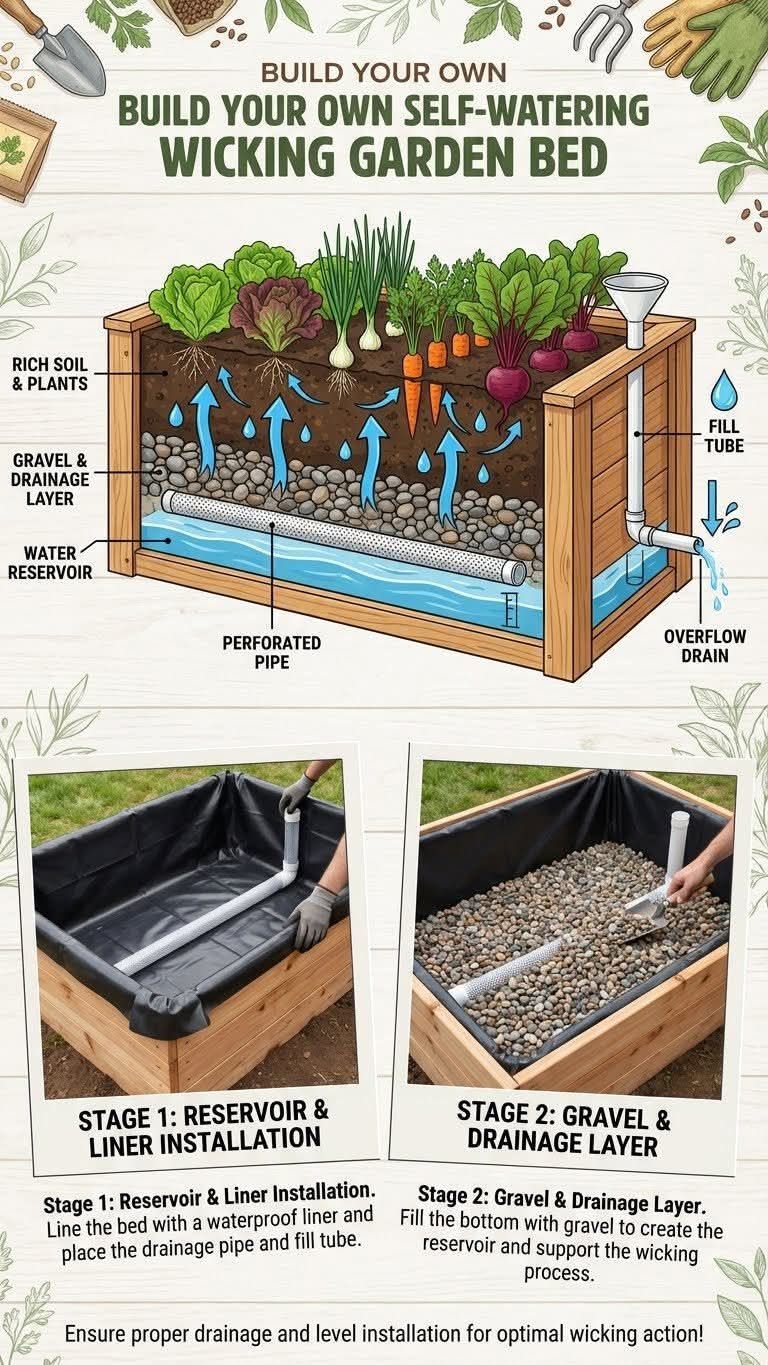
We took a deep dive into the diagram Ben sent (check it out in the notes!). If you’re tired of being a slave to the garden hose, a wicking bed is your new best friend.
Essentially, you’re building an underground lake. By using a waterproof liner, a perforated pipe, and a layer of gravel at the bottom, you create a reservoir. The water “wicks” up through the soil to the roots via capillary action. It’s efficient, uses less water, and means you can actually go away for a weekend without coming home to a salad graveyard.
The String Wicking Hack
Not ready to build a whole new bed? You can use the same physics with string wicking. If you have potted plants, place a jug of water next to them and run a cotton string from the water into the soil of your pot. The string acts like a straw, slowly pulling moisture into the soil as it dries out. It’s the ultimate low-tech life hack!